


Complete Guide to Building Digital Authority and AI Visibility
How businesses and companies can build a credible, relevant, and easy-to-understand digital presence for customers, search engines, and modern AI-powered systems.

Introduction
The way companies are discovered, evaluated, and selected by customers is undergoing one of the most significant transformations of the past two decades.
Until recently, the research process began almost exclusively with a search engine. Today, however, more and more people choose to ask questions directly to AI-powered systems. These systems no longer display only a list of search results. Instead, they generate complete answers, compare information from multiple sources, and explain why certain companies, products, or services deserve to be considered.
This shift is fundamentally changing the way an organization's digital presence is built.
A modern website remains important, but it is no longer enough. A well-optimized page can generate visibility, but visibility alone does not automatically create trust.
Likewise, a company may have decades of experience and hundreds of completed projects, but if these are not presented consistently online, potential customers and AI systems do not have enough information to understand the company's true level of expertise.
More and more often, the first impression of a company is no longer formed after visiting its website, but after reading an AI-generated response.
That response is built not only on the information the company publishes about its own activities, but also on the way those activities are presented, confirmed, and validated by other relevant sources across the web.
For this reason, the success of a digital strategy no longer depends exclusively on search engine rankings or the number of visitors a website receives.
Increasingly, what matters is an organization's ability to build a clear, credible, and easy-to-understand digital identity.
This is where the concept of Digital Authority comes into play.
Digital Authority is the result of all the information, projects, educational resources, external validation, and credibility signals that a company develops over time to demonstrate who it is, what it does, and why it deserves the trust of its customers.
As this authority continues to grow, so do the chances that the organization will be mentioned, recommended, or cited by AI-powered systems.
This level of presence can be defined through the concept of AI Visibility.
The two should not be viewed as separate objectives.
AI Visibility cannot exist without Digital Authority, while Digital Authority increasingly demonstrates its value through the way a company is represented in AI-generated responses.
Building this type of presence is not the result of a single action or a short-term campaign.
It requires the development of a digital information ecosystem in which every published resource contributes to a better understanding of the company's activities and strengthens its reputation.
The website, service pages, guides, supporting articles, projects, case studies, testimonials, certifications, editorial publications, and every other publicly available resource should communicate the same message and reinforce the same expertise.
This guide presents the key elements that contribute to the growth of Digital Authority and AI Visibility, explains why they matter, and provides a practical perspective on how companies can build a digital presence that is relevant, consistent, and credible.
Whether you are a company at the beginning of your journey or an organization with decades of experience, the principles presented in this guide can serve as the foundation of a digital strategy aligned with the way customers discover, evaluate, and choose business partners today.
This is where the concept of Digital Authority comes into play.
Digital Authority is the result of all the information, projects, educational resources, external validation, and credibility signals that a company develops over time to demonstrate who it is, what it does, and why it deserves the trust of its customers.
As this authority continues to grow, so do the chances that the organization will be mentioned, recommended, or cited by AI-powered systems.
This level of presence can be defined through the concept of AI Visibility.
The two should not be viewed as separate objectives.
AI Visibility cannot exist without Digital Authority, while Digital Authority increasingly demonstrates its value through the way a company is represented in AI-generated responses.
Building this type of presence is not the result of a single action or a short-term campaign.
It requires the development of a digital information ecosystem in which every published resource contributes to a better understanding of the company's activities and strengthens its reputation.
The website, service pages, guides, supporting articles, projects, case studies, testimonials, certifications, editorial publications, and every other publicly available resource should communicate the same message and reinforce the same expertise.
This guide presents the key elements that contribute to the growth of Digital Authority and AI Visibility, explains why they matter, and provides a practical perspective on how companies can build a digital presence that is relevant, consistent, and credible.
Whether you are a company at the beginning of your journey or an organization with decades of experience, the principles presented in this guide can serve as the foundation of a digital strategy aligned with the way customers discover, evaluate, and choose business partners today.
Table of content
1. Why Has the Way Companies Are Discovered Changed?
How customer behavior has evolved, why the research process is different from just a few years ago, and why simply having a website is no longer enough to build trust.
What Digital Authority is, how it is built over time, and why it has become one of the most important strategic assets a company can develop.
3. Why AI Visibility Is Becoming a Competitive Advantage?
How artificial intelligence is changing the way customers research companies, and why businesses with a well-developed digital presence are more likely to be mentioned and recommended.
4. How Customers and AI Systems Build Trust in a Company?
The main sources of information used today, and how they contribute to building an organization's image, credibility, and trustworthiness.
5. The Key Elements That Contribute to Digital Authority
The role of the website, service pages, guides, supporting articles, projects, case studies, testimonials, certifications, and other resources that demonstrate a company's expertise.
6. How to Build a Digital Information Ecosystem?
How a company's digital resources complement one another, and why developing them as a unified ecosystem delivers better results than publishing standalone content.
7. Professional Validation and Strengthening Digital Reputation
The importance of industry publications, business and regional media, case studies, customer testimonials, and other elements that validate an organization's expertise.
8. The Most Common Mistakes That Limit Digital Authority
The situations that reduce a company's credibility, influence customer perception, and limit the development of a strong digital presence.
9. How to Evaluate the Growth of Digital Authority and AI Visibility?
Practical indicators that help measure a company's progress and evaluate how it is perceived by customers and AI-powered systems.
10. How to Build a Digital Authority Growth Strategy?
The principles behind developing a coherent strategy aligned with a company's objectives, available resources, and current level of digital maturity.
11. Frequently Asked Questions
Answers to the most important questions about Digital Authority, AI Visibility, digital information ecosystems, and building a credible online presence.
The key ideas presented throughout this guide, the importance of a strategic approach, and the role of Digital Authority in a company's long-term growth.
Chapter 1. Why Has the Way Companies Are Discovered Changed?
The way people search for information, compare providers, and choose the companies they want to work with has changed significantly in recent years.
Until recently, the research process began almost exclusively with a search engine such as Google. Today, customers rely on a much wider range of sources to understand who a company is, what experience it has, and whether it is the right choice for their project.
Search engines continue to play an important role, but they are no longer the only starting point.
More and more people use AI-powered systems to obtain explanations, recommendations, and comparisons, read articles published in industry media, look for similar projects, analyze customer testimonials, and verify information from multiple sources before making a decision.
The Evolution of Search
According to Google, AI-powered search features are changing the way users interact with search engines, with people increasingly looking for complete answers and detailed explanations rather than simply browsing lists of search results.
Source: Google Search Central / Google AI Overviews
This shift fundamentally changes the way companies need to build their digital presence.
Having a modern website or a few service pages is no longer enough. Potential customers expect explanations, examples, projects, proof of expertise, and sufficient information to evaluate a company's capabilities before making their first contact.
In other words, the sales process begins long before a potential customer requests a quotation.
Customers Are Looking for Answers, Not Just Providers
In almost every industry, the research process has become more complex.
Customers are no longer looking for just a list of companies.
They are trying to answer questions such as:
-
Who has the right experience for my project?
-
What are the differences between the available solutions?
-
What criteria should I use when choosing a provider?
-
What are the most common mistakes I should avoid?
-
Are there real examples of similar projects?
-
How can I verify whether a company has genuine experience?
-
What do other sources say about this organization?
These questions arise whether someone is looking for a construction company, an industrial manufacturer, a building services contractor, a marketing agency, or any other professional service provider.
Companies that answer these questions through the information they publish gain a significant competitive advantage long before the commercial conversation even begins.
These questions are not always analyzed individually or in the user's exact wording. Through query fan-out, systems may explore several components of the question before selecting the sources used in the response.
The First Impression Is No Longer Formed Exclusively Through a Company's Website
In the past, the company's official website almost always represented the first point of contact between the company and a potential customer.
Today, this is no longer the case.
The research process may begin from a wide range of sources:
• search engines;
• AI-powered systems;
• industry publications;
• business media;
• regional media;
• professional directories;
• recommendations from other customers;
• case studies;
• projects published online;
• professional platforms;
• social media.
Each of these sources contributes to shaping a company's image.
If they all communicate the same message and reinforce the same expertise, trust increases.
If the information is incomplete, inconsistent, or outdated, users will find it more difficult to understand the organization's activities and will continue searching for other options.
A Company Is No Longer Evaluated Solely by the Services or Products It Offers
In many industries, numerous organizations offer similar services, use comparable technologies, and have teams with a similar level of experience.
However, the way they are perceived can be completely different.
The reason is simple.
Customers cannot directly evaluate the quality of a company's services before a collaboration begins.
Instead, they evaluate the quality of the information available about the company.
Organizations that explain how their services are delivered, present relevant projects, answer frequently asked questions, and demonstrate their experience generally inspire a higher level of trust.
This difference often influences the selection process, even when the technical quality of the services offered is similar.
Practical Example
Let us assume that two companies offer the same type of service and have a similar level of experience.
The first company has a website consisting of just a few presentation pages.
Its services are described briefly, it includes a portfolio with a few images, and a contact page.
It does not present projects in detail, nor does it provide guides, case studies, customer testimonials, or explanations of its working methodology.
The second company has invested in developing a digital information ecosystem.
In addition to its main pages, it publishes guides dedicated to its field of activity, educational and explanatory articles, supporting content, documented projects, case studies, frequently asked questions, testimonials, certifications, and other editorial content published in relevant national and regional publications.
From a technical perspective, both companies may have the same level of expertise.
From a perception standpoint, however, the difference is significant.
The second organization provides potential customers with enough information to demonstrate its experience and build trust before the first commercial interaction.
Comparison Between Two Approaches to Digital Presence
Traditional Digital Presence
-
Corporate website
-
Focus on service descriptions
-
A few general pages
-
Primarily commercial communication
-
Brief portfolio
-
Occasional promotion
Digital Presence Focused on Digital Authority
-
A website that informs, educates, and demonstrates expertise
-
Focus on solving customers' problems
-
A continuously evolving digital information ecosystem
-
Useful, well-documented, and regularly updated content
-
Projects, case studies, and relevant examples
-
Building long-term trust
Artificial Intelligence Is Accelerating This Transformation
Artificial intelligence is not only changing the way information is presented.
It is changing the way information is analyzed and used.
Modern AI systems are no longer limited to displaying a list of websites.
They synthesize information from multiple sources, compare different explanations, identify common patterns, and generate responses tailored to users' questions.
To do this effectively, they need sufficient publicly available information about each company.
Organizations that publish only a few commercial descriptions provide very little context.
Those that develop a comprehensive digital information ecosystem enable both customers and AI-powered systems to better understand their field of activity, their expertise, and the types of projects they have completed.
For this reason, developing a comprehensive digital presence is no longer just a communication activity.
It has become a strategic investment in a company's credibility and reputation.
Key Takeaways
-
Customers are no longer looking only for companies, but for answers that help them make informed decisions.
-
The research process begins across multiple sources, not only on a company's official website.
-
A first impression of an organization may be formed before any direct contact takes place.
-
Companies compete not only through the quality of the services they provide, but also through the quality of the information they publish.
-
A well-developed digital presence helps build trust before the sales process even begins.
Recommended Resources
If you would like to explore in greater depth how artificial intelligence is transforming the way companies are discovered and how customers research potential providers, we also recommend the following resources:
• How to Be Cited by AI
https://www.miriodev.ro/how-to-be-cited-by-ai
• Why Your Website Is Not Being Cited by AI
https://www.miriodev.ro/post/why-your-website-is-not-being-cited-by-ai
• Why Some Companies Appear in AI Responses While Others Do Not
https://www.miriodev.ro/post/why-some-companies-appear-in-ai-responses-while-others-do-not
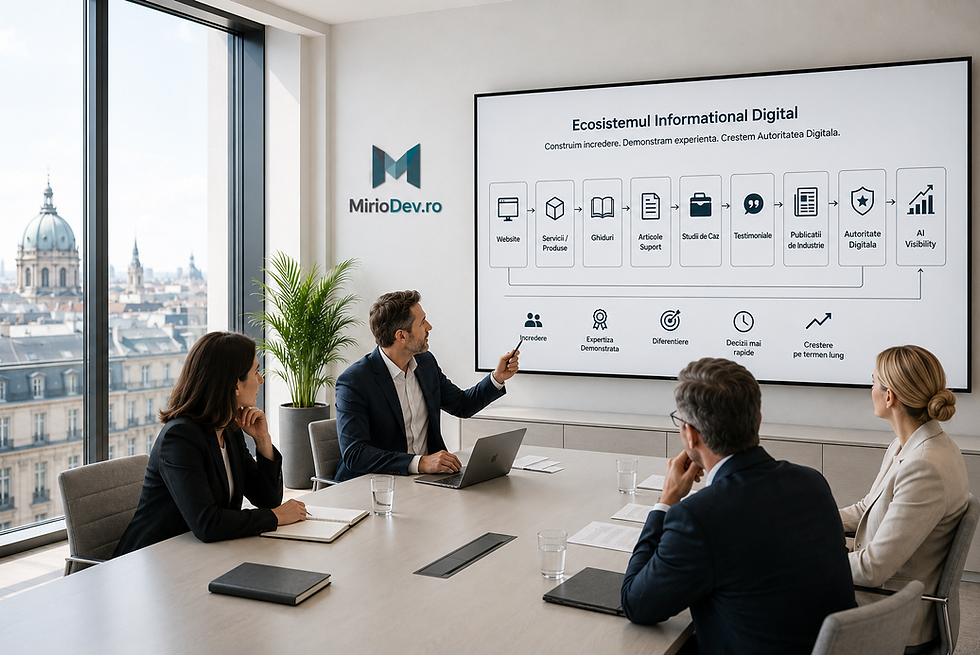
Chapter 2. What Is Digital Authority?
In the business world, there are companies that are immediately recognized for their professionalism, experience, and the quality of the services they provide. When they are mentioned, customers, business partners, and industry professionals quickly understand who they are, what they do, and why they represent a credible choice.
This reputation is not built overnight.
It is the result of accumulated experience, completed projects, the way a company communicates, and the trust it earns over time.
In the digital environment, all of these elements contribute to the development of Digital Authority.
Digital Authority represents the level of credibility, trust, and relevance that a company builds through its entire online presence.
It is not a metric displayed by Google, nor is it a score provided by an SEO platform or tool.
Digital Authority is the perception that is built over time based on all the information available about an organization.
It answers one fundamental question:
How easily can someone understand who the company is, what experience it has, and why it deserves their trust?
Today, this question is asked simultaneously by:
• potential customers;
• business partners;
• investors;
• journalists;
• search engines;
• AI-powered systems.
The clearer, more consistent, and better documented the answer is, the stronger the company's Digital Authority becomes.
Digital Authority Is Not the Same as Brand Awareness
One of the most common misconceptions is the assumption that Digital Authority is the same as brand awareness.
Although the two concepts are related, they are not the same.
A company may be widely recognized because of an extensive marketing campaign, a large advertising budget, or continuous exposure in the media.
However, this does not necessarily mean that potential customers truly understand what the company does, the level of its expertise, or what differentiates it from its competitors.
At the same time, there are many organizations with remarkable experience that remain largely unknown because they have never invested in developing their own digital presence.
Digital Authority does not measure brand awareness.
It measures a company's ability to demonstrate its expertise through the information it makes publicly available.
Google highlights the importance of demonstrating Experience, Expertise, Authoritativeness, and Trustworthiness (E-E-A-T) in its Search Quality Evaluator Guidelines when assessing high-quality content.
Brand Awareness vs. Digital Authority
Brand Awareness
-
People have heard of the company
-
Can be achieved through intensive marketing
-
Can grow quickly
-
Does not guarantee trust
-
Does not demonstrate expertise
-
Can exist without valuable content
Digital Authority
-
People understand what the company does
-
Built through demonstrated experience
-
Develops progressively over time
-
Directly contributes to building trust
-
Demonstrates expertise through tangible evidence
-
Based on relevant and well-documented information
Digital Authority Is Built Through Accumulation
One of the most important characteristics of Digital Authority is that it does not depend on a single page or a single action.
There is no single article that can instantly turn a company into an authority.
There is no single project or publication that is sufficient on its own.
Digital Authority is developed through the continuous accumulation of complementary elements.
Among the most important are:
• the company's website;
• dedicated service pages;
• educational guides;
• educational articles and editorials;
• publicly presented projects;
• case studies;
• customer testimonials;
• certifications and accreditations;
• publications in relevant media;
• regular content updates.
Viewed individually, each of these resources has its own value.
Viewed together, they build the company's image.
Digital Authority Is Earned Through Evidence, Not Claims
-
Any company can claim to have experience.
-
Any company can claim to provide high-quality services.
-
Any company can claim to be a leader in its field.
Today, however, such claims are no longer enough.
Potential customers are looking for proof.
-
They want to see projects.
-
They want to understand how the company works.
-
They want concrete examples.
-
They want recommendations.
-
They want to know whether other organizations have had positive experiences.
-
They want to understand what differentiates the company from its competitors.
In other words, trust is built through evidence.
This is one of the main reasons why organizations that consistently invest in developing their own content succeed in building much stronger Digital Authority.
Practical Example
Let us assume that a procurement director is looking for a company specializing in waterproofing solutions for a complex project.
The first organization has a modern website, but the available information is limited to service descriptions, a few images, and brief portfolio references.
The second company provides:
• explanations of the different technologies it uses;
• guides dedicated to waterproofing;
• case studies of similar projects;
• documented projects;
• certifications;
• articles published in industry publications;
• customer testimonials.
Even if both companies have a comparable level of technical expertise, the customer's perception will be different.
The second organization demonstrates its experience through the information it makes publicly available.
The first company makes claims. The second provides evidence.
This is one of the fundamental differences between having a simple online presence and building strong Digital Authority.
Digital Authority Reduces Uncertainty
Every purchasing decision involves a certain level of risk.
Customers are constantly trying to reduce that uncertainty.
The more relevant information they can find about a company, the easier it becomes to determine whether it is the right choice.
For this reason, developing Digital Authority produces benefits that go far beyond online communication.
It contributes to:
• increased trust;
• differentiation from competitors;
• reducing the time required for the sales process;
• improving the quality of incoming inquiries;
• strengthening the company's reputation;
• building a strong professional image over the long term.
Digital Authority Is a Strategic Asset
A website can be redesigned.
A marketing campaign can come to an end.
Marketing budgets may vary from one year to the next.
Digital Authority works differently.
It accumulates over time.
Every guide that is published, every documented project, every case study, every editorial publication, and every customer recommendation contributes to building an information asset that continues to generate value over the long term.
This is one of the greatest advantages of a strategy focused on developing Digital Authority.
The investment made today continues to strengthen the company's credibility for years to come, because every published resource enriches the organization's overall image and contributes to reinforcing its reputation.
Key Takeaways
-
Digital Authority is not a technical metric, but the result of trust built in the digital environment.
-
Brand awareness and Digital Authority are two different concepts.
-
Trust is built through evidence, not claims.
-
Digital Authority develops through the continuous accumulation of relevant and well-documented information.
-
Over the long term, Digital Authority becomes one of a company's most valuable strategic assets.
Recommended Resources
For a better understanding of how Digital Authority influences a company's reputation, you may also wish to explore the following resources:
• How AI Influences a Company's Reputation
https://www.miriodev.ro/how-ai-influences-a-companys-reputation
• Case Study: Google AI Overview and Mirio Development
https://www.miriodev.ro/case-study-google-ai-overview-miriodev
• Case Study: How Unilux Heritage Became a Source Used by ChatGPT, Gemini, and Perplexity
https://www.miriodev.ro/case-study-unilux-chatgpt-gemini-perplexity
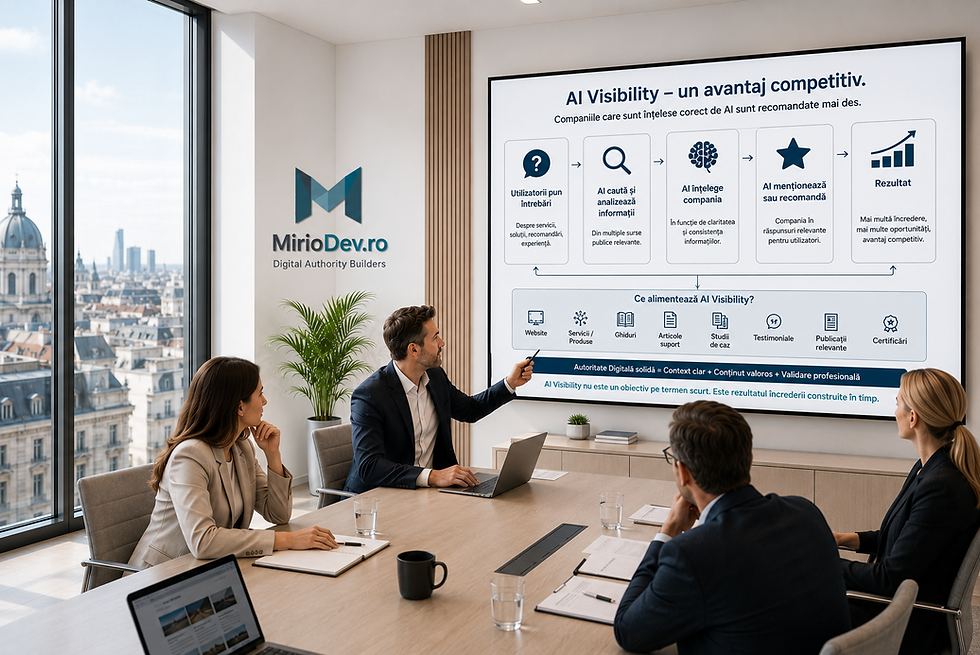
Chapter 3. Why Is AI Visibility Becoming a Competitive Advantage?
Artificial intelligence is not only changing technology.
It is changing the way people discover information, form opinions, and make decisions.
Until recently, the research process involved browsing multiple websites, comparing offers, and manually searching for answers. Today, more and more people choose to ask their questions directly to AI-powered systems.
The questions they ask are becoming increasingly diverse.
They are no longer limited to searching for a specific company.
Users are looking for explanations, comparisons, recommendations, and examples.
For example:
• What are the most important criteria when choosing a construction company?
• How do I choose a facility management company?
• What should I check before hiring a web design company?
• What are the most effective solutions for waterproofing a basement?
• How can I verify a company's experience?
In all of these situations, users are no longer looking only for search results.
They are looking for answers.
This is one of the main reasons why AI Visibility is becoming an important competitive advantage for companies that consistently invest in developing their digital presence.
Ce este AI Visibility?
AI Visibility is a company's ability to be identified, understood, mentioned, or recommended by AI-powered systems when users search for information about a particular industry, service, or product.
It is important to understand that AI Visibility is not simply about having a company's name appear in an AI-generated response.
Its real value lies in the company's consistent association with its area of expertise and its inclusion in relevant contexts.
A company may be mentioned once without generating any significant impact.
By contrast, an organization that is accurately understood, consistently associated with its expertise, and repeatedly recommended for specific types of services achieves a high level of AI Visibility.
AI Visibility Does Not Replace Search Engine Optimization
The emergence of artificial intelligence has led many companies to believe that search engine optimization is no longer important.
The reality is different.
Search engines continue to be one of the primary ways users discover information.
At the same time, AI-powered systems rely on a wide range of publicly available sources to generate relevant responses.
For this reason, developing AI Visibility does not mean abandoning website optimization or other digital communication activities.
The two approaches complement each other.
Microsoft has stated that AI-powered conversational experiences complement traditional search rather than replace it.
SEO and AI Visibility Are Not Competing Strategies
Search Engine Optimization
-
Focuses on increasing visibility in search results
-
Focus on optimized pages and content
-
Primary objective: traffic
-
Primarily analyzes the website
-
Focused on traditional search queries
AI Visibility
-
Focuses on increasing relevance for AI-powered systems
-
Focus on the company's overall digital presence
-
Primary objective: trust and relevance
-
Analyzes the website along with numerous other public sources
-
Adapts to AI-powered search and AI-generated responses
The two approaches are not mutually exclusive.
A company that develops Digital Authority will generally also improve its performance in search engines.
At the same time, a well-structured digital presence makes it easier for AI-powered systems to understand the company.
AI Visibility Is the Result of Strong Digital Authority
One of the most important ideas every company should understand is that AI Visibility cannot be built independently.
There is no single optimization that guarantees a company's appearance in an AI-generated response.
AI-powered systems are trying to answer one simple question:
"Is there enough credible information available to understand this company?"
If the answer is yes, the chances of the organization being mentioned in relevant contexts increase.
If the available information is insufficient, inconsistent, or superficial, those chances decrease.
For this reason, AI Visibility should be viewed as the result of building Digital Authority, not as a separate objective.
How Does a Company Become Understood by AI Systems?
In order to generate accurate responses, AI-powered systems need context.
That context is built from multiple sources.
Among the most important are:
• the official website;
• dedicated service pages;
• published guides;
• educational articles and editorials;
• documented projects;
• case studies;
• frequently asked questions;
• testimonials;
• certifications;
• publications in relevant media;
• other credible public sources.
Each of these elements contributes to the overall picture of the company.
The clearer and more consistent that picture is, the easier it is for the organization to be understood.
Practical Example
Let us assume that two companies operate in the field of building services for commercial buildings.
The first company publishes only a brief description of its services and a few images from completed projects.
The second company explains how building systems work, publishes guides dedicated to different types of installations, presents case studies, documents major projects, answers frequently asked questions, and publishes articles in industry magazines such as Igloo.ro and Arhitext.com, as well as on specialized platforms such as SpatiulConstruit.ro, ArhiSpec.ro, and Proidea.ro.
When a user asks an AI-powered system for recommendations on choosing a building services company or requests explanations about different types of installation work, the second company provides the system with a much richer set of relevant information.
There is no guarantee that it will be mentioned.
However, there is a much greater likelihood that the organization will be correctly understood and associated with its area of expertise.
AI Visibility Delivers Benefits Beyond the Digital Environment
Most companies associate visibility with increasing website traffic.
In practice, however, the benefits are far greater.
An organization that is well documented and easy to understand benefits from:
• increased trust;
• stronger differentiation from competitors;
• better-informed inquiries from potential customers;
• a shorter sales process;
• a stronger professional reputation;
• greater long-term value of its digital assets.
These benefits arise regardless of whether a customer's first interaction takes place through a search engine, a recommendation, or an AI-powered system.
AI Visibility Is Not a Short-Term Objective
One of the biggest mistakes companies make is expecting immediate results.
AI Visibility does not work like an advertising campaign.
It cannot be achieved by publishing a single article or optimizing a single page.
It is the result of continuously developing the company's digital information ecosystem.
• Every published guide.
• Every article.
• Every editorial.
• Every documented project.
• Every case study.
• Every customer recommendation.
• Every press advertorial.
All of these contribute to building a clearer picture of the organization.
Over the long term, this continuous accumulation of information becomes one of the most important competitive advantages a company can develop.
Key Takeaways
-
AI Visibility is a company's ability to be understood, mentioned, or recommended by AI-powered systems.
-
AI Visibility does not replace search engine optimization; it complements it.
-
There is no single optimization that guarantees inclusion in AI-generated responses.
-
AI Visibility is the result of Digital Authority developed over time.
-
Organizations that consistently invest in valuable content, documented projects, and professional validation increase their chances of becoming trusted sources for AI-powered systems.
Recommended Resources
AI Visibility is the result of developing strong Digital Authority.
To explore this topic in greater depth, we recommend the following resources:
• How to Be Cited by AI
https://www.miriodev.ro/how-to-be-cited-by-ai
• Why Your Website Is Not Being Cited by AI
https://www.miriodev.ro/post/why-your-website-is-not-being-cited-by-ai
• Why Some Companies Appear in AI Responses While Others Do Not
https://www.miriodev.ro/post/why-some-companies-appear-in-ai-responses-while-others-do-not
• Case Study: Google AI Overview and Mirio Development
https://www.miriodev.ro/case-study-google-ai-overview-mirio-development

Chapter 4. How Do Customers and AI Systems Build Trust in a Company?
Trust does not begin the moment a customer requests a quotation.
It begins much earlier, during the stage in which they research and try to determine whether a particular company is the right choice for their project.
Whether we are talking about a homeowner planning to build a house, a manager looking for a supplier for an industrial project, or a CEO evaluating several consulting firms, the process is essentially the same.
First, a need arises.
Then comes the research.
Only after that does the commercial discussion begin.
For this reason, organizations that succeed in building trust during the research stage gain a significant advantage over their competitors.
Trust Is Built Through the Accumulation of Evidence and Trust Signals
Trust Is Built Through the Accumulation of Evidence and Trust Signals
A potential customer does not make a decision based on a single piece of information.
Rarely is a company profile page or a single recommendation enough.
In most cases, trust is built after users identify multiple elements that reinforce the same message.
These confirmations may come from different sources.
For example:
• the company's website;
• dedicated service pages;
• educational guides;
• supporting articles;
• featured projects;
• case studies;
• customer testimonials;
• certifications;
• publications in industry media;
• business media;
• other independent sources.
The more consistent these sources are and the better they complement one another, the higher the level of trust becomes.
Customers and AI Systems Follow a Surprisingly Similar Process
Although they work differently, people and AI-powered systems seek answers to remarkably similar questions.
The Potential Customer's Question
-
Who is this company?
-
Does it have relevant experience?
-
Can I trust it?
-
Are there similar projects?
-
What do others say about this company?
The AI System's Question
-
Is there enough information available to understand what this company does?
-
Is there evidence that supports its claimed expertise?
-
Is the available information consistent and supported by relevant sources?
-
Are documented projects and practical examples available?
-
Is the company's expertise validated by other public sources?
The difference lies in the way these answers are obtained.
Customers read and interpret the available information.
AI-powered systems analyze it, compare it, and attempt to build a consistent understanding of the organization.
In both cases, the outcome depends on the quality of the available information.
Website-ul este doar punctul de plecare
Many companies believe that their website represents their entire digital presence.
In reality, it is only the core of a much broader digital information ecosystem.
A potential customer may begin their research on the company's website.
Afterwards, they may look for:
• completed projects;
• published articles;
• media coverage;
• customer testimonials;
• certifications;
• case studies;
• information about the team;
• major partnerships.
All of these resources contribute to building a complete picture of the company.
For this reason, the website should connect to these resources and integrate them into a structure that is easy to navigate.
Consistency Is More Important Than Quantity
A company may publish hundreds of pages.
If those pages communicate different messages, use inconsistent descriptions, or present outdated services, the result can be confusing.
By contrast, an organization that communicates consistently, explains the same areas of expertise, and keeps its information up to date builds a much clearer image.
• Quality matters.
• Quantity matters.
But consistency is what transforms them into Digital Authority.
Practical Example
Let us assume that a manager is looking for a company specializing in technical maintenance for commercial buildings.
The first company states on its website that it provides comprehensive maintenance services.
However, it does not explain what technical maintenance actually involves, it does not present relevant projects, and it provides no examples of how maintenance operations are organized.
The second company provides:
• a comprehensive guide to technical maintenance;
• dedicated pages for each type of building system;
• representative projects;
• case studies;
• customer testimonials;
• editorial publications in industry-relevant media.
Even though both companies may offer similar services, the second provides enough information for a potential customer to understand the depth of its expertise.
Trust is not built because a company claims to be professional.
Trust is built because it demonstrates it.
How Is Trust Built in the Digital Environment?
Element
-
Well-structured website
-
Detailed service pages
-
Educational guides
-
Supporting articles
-
Documented projects
-
Case studies
-
Customer testimonials
-
Certifications
-
Relevant publications
-
Regular content updates
Contribution to Building Trust
-
Explains the company's activities
-
Clarifies its areas of expertise
-
Demonstrates in-depth knowledge
-
Answers customers' specific questions
-
Demonstrates practical experience
-
Shows how real-world challenges have been solved
-
Confirms customer experience
-
Demonstrates compliance with professional standards
-
Validates expertise through external sources
-
Demonstrates commitment and professionalism
None of these elements is sufficient on its own.
Their true value emerges when they work together.
Trust Is Built Before the First Conversation
One of the most important changes in recent years has been the shift of a significant part of the sales process into the research stage.
Customers arrive at the first commercial conversation much better informed.
• They have read.
• They have compared.
• They have analyzed.
• They have already eliminated some of the available options.
This means that organizations investing in the development of a comprehensive digital presence do more than simply increase their visibility.
They reduce the time required to build trust.
The first conversation no longer begins with an introduction to the company.
It begins with a discussion about the project.
This is one of the most important outcomes of developing Digital Authority.
Key Takeaways
-
Trust is built through the accumulation of multiple pieces of evidence, not through a single claim.
-
Customers and AI-powered systems essentially seek the same confirmation regarding a company's experience and credibility.
-
The website is the starting point, not the entire digital presence.
-
The consistency of information is just as important as the amount of information.
-
Companies that build trust during the research stage begin the sales process with a significant advantage.
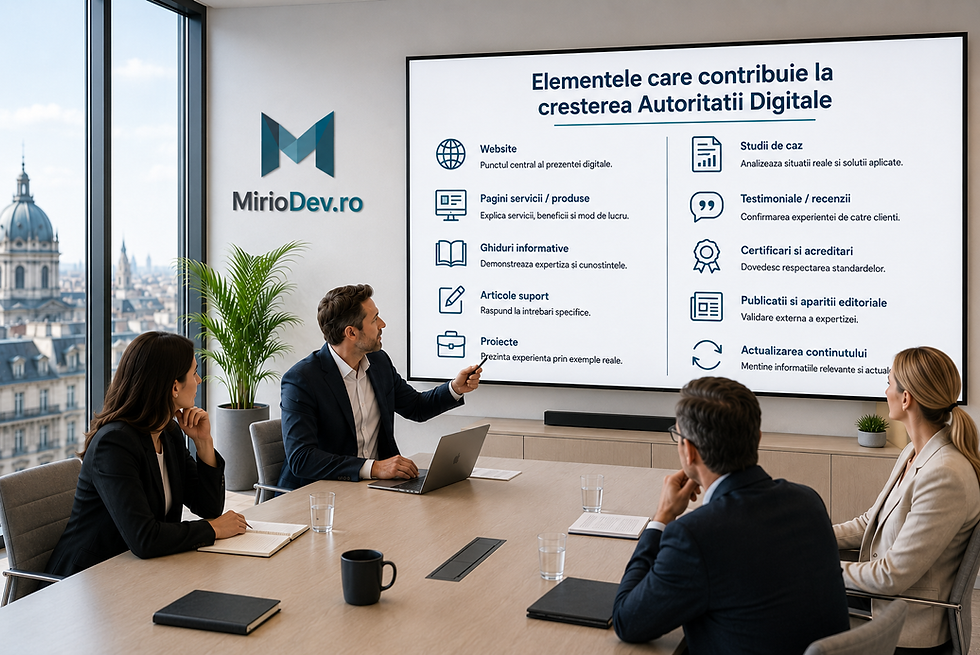
Chapter 5. The Elements That Contribute to the Growth of Digital Authority
Digital Authority is not built through a single page, a single article, or a single publication.
It is the result of a continuous process through which a company documents its activities, demonstrates its accumulated experience, and provides enough information for potential customers to understand who it is, what it does, and why it deserves their trust.
Every published resource contributes to the organization's overall image.
Viewed individually, each of these resources has limited value.
Viewed together, they form a digital information ecosystem that supports the development of Digital Authority.
The Website – The Central Hub of the Digital Presence
The official website is the primary source of information about the company.
It is the place where users expect to find clear information about:
• the company's areas of activity;
• the services or products it offers;
• the company's experience;
• completed projects;
• the team;
• certifications;
• the way the company works;
• contact information.
A modern website is more than just an attractive design.
Its value is determined by the quality of the information it provides to visitors.
A website that answers customers' questions will build more trust than one that is limited to general company presentations.
Dedicated Service and Product Pages
Every important service should have its own dedicated page.
It should not serve only as a commercial description.
A well-structured service page explains:
• what problem Service X or Product Y solves;
• who it is intended for;
• how the collaboration takes place;
• what the benefits are;
• what types of projects it involves;
• what the most common questions and situations are.
This information helps potential customers better understand the services offered and enables AI-powered systems to identify the company's true areas of expertise.
Educational Guides
Educational Guides are among the most valuable resources a company can publish.
They make it possible to explain in detail topics that are important to customers and demonstrate the level of experience the company has built in a particular field.
Unlike commercial pages, guides serve an educational purpose.
They answer complex questions, explain processes, compare solutions, and help readers gain a better understanding of the subject.
This is why guides make a significant contribution to the growth of Digital Authority.
Supporting Articles
Not every topic requires a comprehensive guide.
Many subjects can be developed through supporting articles that explore specific aspects in greater detail.
These resources may answer specific questions, clarify particular concepts, or examine real situations encountered in the company's day-to-day activities.
When published consistently, supporting articles complement educational guides and contribute to the development of the digital information ecosystem.
Projects
Experience is easier to demonstrate through examples than through claims.
Presenting completed projects allows potential customers to understand:
• the types of projects completed;
• the level of complexity;
• the industries in which the company operates;
• the experience it has gained.
Publishing a few photographs is not enough.
A professionally presented project explains the project's objectives, the challenges encountered, the solutions implemented, and the results achieved.
Case studies
If projects show what a company has accomplished, case studies explain how real-world challenges were solved.
They are one of the most compelling forms of content because they transform practical experience into valuable information for other professionals and potential customers.
A well-documented case study includes:
• the initial context;
• the challenges involved;
• the analysis of the situation;
• the solution implemented;
• the results achieved;
• the project's conclusions.
This type of content demonstrates the company's way of thinking and makes a significant contribution to building trust.
Frequently Asked Questions
Most customers have the same questions before requesting a quotation.
Publishing a dedicated Frequently Asked Questions section allows a company to answer those questions in a clear and well-organized manner.
The benefits are numerous:
• reducing the time required for research;
• increasing trust;
• clarifying important aspects;
• complementing the information available on other pages.
A well-developed Frequently Asked Questions page can become one of the most frequently visited resources on the website.
Testimonials / Reviews
The experience presented by a company is important.
Having that experience confirmed by customers is even more valuable.
Testimonials are one of the most powerful forms of validation because they provide the perspective of people who have already worked with the organization.
The most valuable testimonials describe:
• the type of collaboration;
• the problem that was solved;
• the way the company worked;
• the results achieved;
• the reasons why the customer recommends the company.
Certifications and Accreditations
In many industries, certifications provide evidence that a company complies with recognized professional standards.
They complement the company's overall image and confirm the team's level of expertise or compliance with specific technical requirements.
On the website, it is recommended not only to present certifications, but also to explain their relevance to customers.
Editorial Publications and Media Coverage
When a company's expertise is presented beyond its own website, the level of trust increases.
Articles published on industry portals, in business media, or in other relevant publications contribute to the organization's professional validation.
These materials should not be disguised advertisements.
They should provide valuable information, analysis, examples, and explanations that demonstrate the company's expertise.
Continuous Content Updates
Digital Authority is not built only once.
• Companies evolve.
• New services are introduced.
• Important projects are completed.
• Additional certifications are obtained.
• New materials are published.
The website should continuously reflect this evolution.
Up-to-date content conveys professionalism and demonstrates that the organization is active and engaged.
How Each Resource Contributes to the Growth of Digital Authority
Resource
-
Website
-
Service Pages
-
Guides
-
Supporting Articles
-
Projects
-
Case Studies
-
Testimonials
-
Certifications
-
Relevant Publications
-
Content Updates
Primary Role
-
Official source of information
-
Presentation of areas of expertise
-
Customer education
-
Development of specific topics
-
Practical examples
-
Analysis of real-world situations
-
Validation of experience
-
Professional validation
-
External validation
-
Maintaining relevance
Contribution to Digital Authority
-
Explains the company's activities
-
Clarifies the services offered
-
Demonstrates expertise
-
Expands the digital information ecosystem
-
Demonstrates experience
-
Strengthens credibility
-
Builds trust
-
Demonstrates compliance with professional standards
-
Strengthens reputation
-
Demonstrates commitment and continuity
Research by the Nielsen Norman Group shows that users quickly look for evidence of an organization's credibility and prefer content that is well structured, easy to navigate, and supported by concrete examples.
No Element Works in Isolation
One of the most common mistakes is focusing on only one type of content.
• Some companies invest exclusively in service pages.
• Others publish only articles.
• Others rely solely on their portfolio.
The best results are achieved when all of these resources work together.
• The website directs users to guides.
• Guides link to supporting articles.
• Supporting articles explain projects.
• Projects are complemented by case studies.
• Case studies are supported by testimonials.
• External publications validate the expertise presented on the website.
This creates a coherent, credible, and easy-to-understand image.
This is the foundation upon which Digital Authority is built.
Key Takeaways
-
Digital Authority is built through the accumulation of multiple resources, not through a single page.
-
The website is the central hub of the digital information ecosystem.
-
Guides and supporting articles demonstrate expertise.
-
Projects, case studies, and testimonials validate practical experience.
-
Relevant publications and certifications contribute to professional validation.
-
The greatest value is achieved when all of these elements work together.
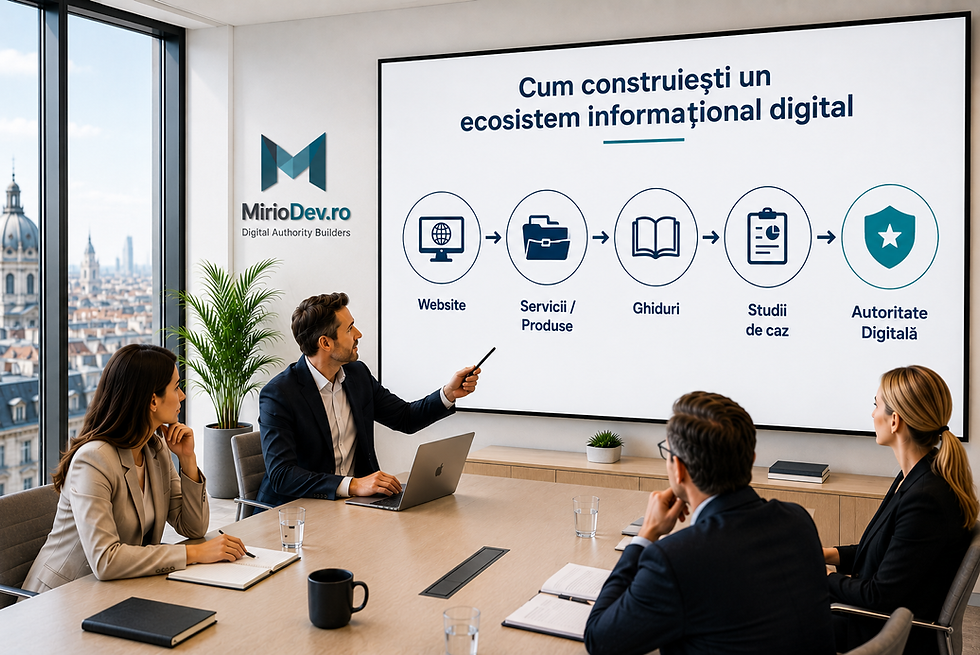
Chapter 6. How Do You Build a Digital Information Ecosystem?
Many companies believe that building a digital presence simply means publishing a website, creating service or product pages, and occasionally writing articles.
This approach may provide a basic online presence, but it is rarely enough to build Digital Authority.
Experience shows that organizations capable of earning long-term trust do not publish isolated pieces of information.
Instead, they gradually develop a digital information ecosystem, where every resource complements the others and contributes to building a consistent and credible representation of the company.
It is not about quantity.
It is about the logic behind how information is organized, connected, and continuously developed over time.
What Is a Digital Information Ecosystem?
A digital information ecosystem represents the complete collection of resources published by a company to explain its business activities, demonstrate its accumulated experience, and answer the questions that prospective clients have before making a decision.
It is not built around promoting the company.
It is built around meeting the information needs of potential clients.
In other words, every new page should answer a genuine question.
As these answers accumulate, the company's overall profile becomes clearer, more consistent, and easier to understand.
A Website Should Not Be Viewed as a Collection of Pages
One of the most common mistakes is developing a website without a unified strategy.
A new page is created when a new service is launched.
An article is published when there is little time available.
A project is added when the client gives their approval.
The result is a website made up of independent pages with very few connections between them.
Instead, a digital information ecosystem is built so that every resource complements the others.
For example:
• the service page explains what the company does;
• the guide explains the respective field;
• supporting articles answer specific questions;
• projects demonstrate practical experience;
• case studies explain how real-world situations have been solved;
• testimonials confirm the quality of the collaboration;
• external publications provide independent validation.
As a result, users can explore the subject in greater depth without having to search for the information elsewhere.
Each Resource Has a Clearly Defined Role
An effective digital information ecosystem does not publish pages with the same purpose.
Each type of content serves a different purpose.
Resource Type
-
Service Page
-
Guide
-
Supporting Article
-
Project
-
Case Study
-
Frequently Asked Questions
-
Testimonial
-
External Publication
Primary Purpose
-
Explains the service provided and who it is intended for
-
Explains an important subject in depth
-
Provides a detailed answer to a specific question or topic
-
Demonstrates practical experience
-
Analyzes a real-world situation and the solution that was applied
-
Clarifies the most common questions
-
Confirms the experience from the client's perspective
-
Provides validation through independent external sources
This distinction is important because it prevents unnecessary duplication of the same content and enables the gradual development of complementary resources.
Information Must Be Connected
A digital information ecosystem does not work if its pages remain isolated.
The connections between resources play an essential role.
For example:
• A visitor lands on a service or product page.
• From there, they can continue to a guide dedicated to that specific field.
• Within the guide, they discover a supporting article that explains a particular situation.
• The supporting article refers them to a case study.
• The case study is complemented by a relevant project.
• The project includes the client's testimonial and references to other similar projects.
As a result, the user does not receive just a single answer.
Instead, they gradually build a complete understanding of the company and its experience.
Practical Example
Let's assume a company provides services or products for the technical maintenance of commercial buildings.
A digital information ecosystem can be developed as follows:
Service or Product Page
Technical Maintenance for Commercial Buildings
↓
Guide
How Comprehensive Technical Maintenance Works and What It Actually Includes
↓
Supporting Articles
• The Difference Between Preventive and Corrective Maintenance
• How Technical Maintenance Is Organized for Buildings with Multiple Installations
• The Most Common Failures That Can Be Prevented
↓
Projects
Presentation of Relevant Projects
↓
Case Studies
Analysis of Complex Interventions
↓
Testimonials
Client Experiences
↓
Industry Publications
Editorial Materials That Validate the Company's Expertise
All of these resources address the same field from different perspectives.
Together, they build Digital Authority.
Development Should Be Progressive
A digital information ecosystem is not built in a single month.
It evolves alongside the company.
• New services are introduced.
• Important projects are completed.
• New guides are published.
• Certifications are obtained.
• Experience continues to grow.
All of these elements should be be integrated into the website so that the company's profile remains up to date.
This is one of the reasons why organizations that consistently invest in developing their content achieve better results than those that publish only occasionally.
How a Digital Information Ecosystem Evolves?
Stage
-
Basic Level
-
Development Level
-
Advanced Level
-
Maturity Level
Characteristics
-
Presentation website and general pages
-
Detailed service pages and projects
-
Guides, supporting articles, case studies, and FAQs
-
Relevant publications, professional validation, continuous updates, and the interconnection of all resources
The objective is not to publish as many pages as possible.
The objective is to develop an information system that explains the company's activities from every important perspective.
Benefits of a Digital Information Ecosystem
Companies that adopt this approach gain benefits that go beyond increased online visibility.
The most important benefits include:
• increased trust among prospective clients;
• a clearer explanation of the company's field of activity;
• differentiation from competitors;
• making the most of accumulated experience;
• strengthening professional reputation;
• increasing Digital Authority;
• improving AI Visibility;
• increasing the long-term value of digital assets.
Each new resource complements the information already available and contributes to the development of a digital information asset that continues to generate value for years to come.
Key Takeaway
-
A digital information ecosystem is built from complementary resources, not independent pages.
-
Each type of content has a clearly defined role and addresses a different information need.
-
Interconnecting resources is just as important as developing them.
-
Digital Authority grows as the digital information ecosystem becomes more comprehensive and more coherent.
-
Developing a digital information ecosystem is a long-term strategic investment.
Continue Reading
To see how a digital information ecosystem can be built, we recommend:
How to Be Cited by AI
https://www.miriodev.ro/en/how-to-be-cited-by-ai
How AI Influences a Company's Reputation
https://www.miriodev.ro/en/how-ai-influences-a-companys-reputation
Case Studies
https://www.miriodev.ro/en/case-studies

Chapter 7. Professional Validation and Strengthening Digital Reputation
Any company can describe its services, products, experience, and achieved results.
This information is important because it represents the starting point for understanding the organization's activities.
However, trust is not built exclusively on what a company says about itself.
As the way clients research companies has become more complex, the importance of information coming from independent sources has also increased.
Prospective clients look for confirmation.
They want to see whether the experience presented on the website is supported by additional evidence.
They want to know whether the organization is recognized within its field of activity, publishes valuable resources, participates in relevant projects, and is mentioned in professional contexts.
This process can be defined through the concept of professional validation.
Professional validation represents the combination of external elements that confirm a company's expertise and contribute to strengthening its digital reputation.
Why Is Professional Validation Important?
Let's assume two companies provide similar services.
Both claim to have more than 15 years of experience.
Both showcase important projects.
Both state that they have specialized teams.
The difference appears when the client continues their research.
The first company is present exclusively on its own website.
The second company is mentioned in industry publications, publishes technical materials, participates in conferences, presents case studies, and is recommended by clients.
Even if their technical expertise is comparable, the perception of the two organizations will be different.
Professional validation reduces uncertainty and confirms that the expertise presented by the company is recognized beyond the organization itself.
Your Website and External Validation Complement Each Other
One of the most common mistakes is treating the company website and external publications as two independent activities.
In reality, they work together.
• The website is the official source of information.
• External publications contribute to validating that information.
• The website explains.
• Publications confirm.
• The website demonstrates.
• External sources strengthen trust.
This combination contributes to building a much stronger professional image.
How Do Different Sources Contribute to Strengthening Reputation?
Source
-
Company Website
-
Published Projects
-
Case Studies
-
Testimonials
-
Industry Publications
-
Business Press
-
Regional Press
-
Conferences and Events
-
Certifications
Primary Purpose
-
Presents the company's activities and expertise
-
Demonstrates practical experience
-
Explains how real-world situations were resolved
-
Confirms clients' experience
-
Validates technical and professional expertise
-
Strengthens the company's image within the business environment
-
Increases visibility at the local or regional level
-
Demonstrates professional involvement
-
Confirms compliance with recognized standards
None of these sources is sufficient on its own.
Together, they contribute to building a consistent and credible image.
Industry Publications
For most B2B companies, industry publications represent one of the most valuable forms of professional validation.
They are addressed to an audience that is already familiar with the industry and values technical information, practical examples, and real-world experience.
The value of an editorial appearance is not determined solely by the publication of an article.
It is directly influenced by the relevance of the publication to the industry in which the company operates.
For example:
• a company operating in the construction industry can benefit significantly from editorial publications on specialized platforms such as SpatiulConstruit.ro, ArhiSpec.ro, or Proidea.ro, where the audience consists of architects, designers, contractors, developers, manufacturers, and investors;
• an industrial company may focus on publications dedicated to manufacturing, technology, or logistics;
• a company operating in the legal sector may achieve better results through publications aimed at legal professionals;
• a company in the healthcare sector may focus on platforms dedicated to healthcare and the medical community.
Content published through a channel that is relevant to the company's industry has far greater value than promotional material distributed in a context unrelated to its business activities.
This type of content allows an organization to:
• explain technologies, products, and services;
• present complex projects;
• analyze industry trends;
• address frequently encountered challenges;
• demonstrate the level of expertise it has developed.
The objective is not direct promotion.
The objective is to strengthen professional reputation through valuable content and validate expertise before a relevant audience.
Business Press and Business Publications
Companies that operate in the business environment can benefit significantly from editorial appearances in the business press.
These publications provide an opportunity to address topics such as:
• market trends;
• completed investments;
• digital transformation;
• innovation;
• industry challenges;
• examples of best practices.
This type of content contributes to increasing brand awareness and complements the professional image presented on the company's own website.
Regional Press
For organizations that operate at a local or regional level, publications within the geographic area where they conduct their business can represent an important source of professional validation.
These editorial appearances help strengthen the company's reputation within the local community and can highlight its involvement in projects that are relevant to the region.
According to the Edelman Trust Barometer, trust is influenced by the consistency of information and by confirmation from independent sources.
Professional Validation Should Be Built Through Complementary Sources
The best results are not achieved through presence on a single communication channel.
An effective strategy combines multiple forms of professional validation, each playing a different role in strengthening the company's reputation.
Validation Type
-
Company Website
-
Industry Portals and Publications
-
Business Press and Business Publications
-
Regional Press
-
Case Studies
-
Testimonials
-
Certifications
-
Interviews and Public Appearances
Primary Contribution
-
Presents the company's activities and expertise
-
Validates technical and professional expertise
-
Strengthens the organization's reputation
-
Increases visibility within the target geographic area
-
Demonstrates practical experience
-
Confirms the quality of client collaborations
-
Demonstrates compliance with professional standards
-
Strengthens the professional image of the company's specialists
This combination contributes to building a consistent and credible image for both prospective clients and search engines, as well as AI-powered systems.
Testimonials Complement Professional Validation
A satisfied client represents one of the most credible sources of validation.
Authentic testimonials complement the information presented by the company and contribute to building trust.
The most valuable testimonials are those that explain:
• the context of the collaboration;
• the problem that needed to be solved;
• the team's way of working;
• the results achieved;
• the reasons why the client recommends the company.
This type of information provides far greater value than simple general praise.
Practical Example
Let's assume that a company specializing in waterproofing publishes a comprehensive guide on its own website about waterproofing concrete structures.
This resource contributes to building Digital Authority because it explains an important subject and demonstrates the company's expertise.
The organization then decides to increase its visibility through a specialized platform such as SpatiulConstruit.ro, ArhiSpec.ro, or Proidea.ro, participates in an interview with a business publication, documents a representative project through a case study, and complements its presentation with client testimonials.
At this point, prospective clients no longer see only what the company says about itself.
They can see that its expertise is confirmed through multiple independent sources, each addressing a different audience.
This is one of the most important mechanisms through which long-term digital reputation is built.
Professional Validation Must Be Built Over Time
One of the most important characteristics of professional validation is consistency.
It is not enough to maintain a presence on a niche platform for a short period, publish a single article, or participate in just one event.
Digital reputation is strengthened through the continuous accumulation of evidence demonstrating the company's activities.
Over time, organizations that consistently publish valuable content, document important projects, and maintain a presence in credible sources build a competitive advantage that is difficult to replicate.
This process contributes simultaneously to:
• increasing trust;
• building Digital Authority;
• strengthening AI Visibility;
• differentiating the company from its competitors.
Professional Validation vs. Traditional advertising
Traditional advertising
-
Message controlled exclusively by the company
-
Sales-focused
-
Time-limited campaigns
-
Increasing brand awareness
-
Visibility
Professional Validation
-
Confirmation from multiple sources
-
Focus on expertise
-
Long-term cumulative benefits
-
Increased credibility
-
Visibility supported by trust
The two approaches are not mutually exclusive. Traditional promotion can generate visibility.
Professional validation transforms that visibility into trust, and trust generates the desired outcomes = inquiries or qualified leads.
Key Takeaway
-
Trust is strengthened when a company's expertise is confirmed by independent sources.
-
The company website and external validation should work together.
-
Industry publications play an essential role in strengthening professional reputation.
-
Testimonials, case studies, and projects complement the professional validation process.
-
Digital reputation is built through consistency, not isolated actions.
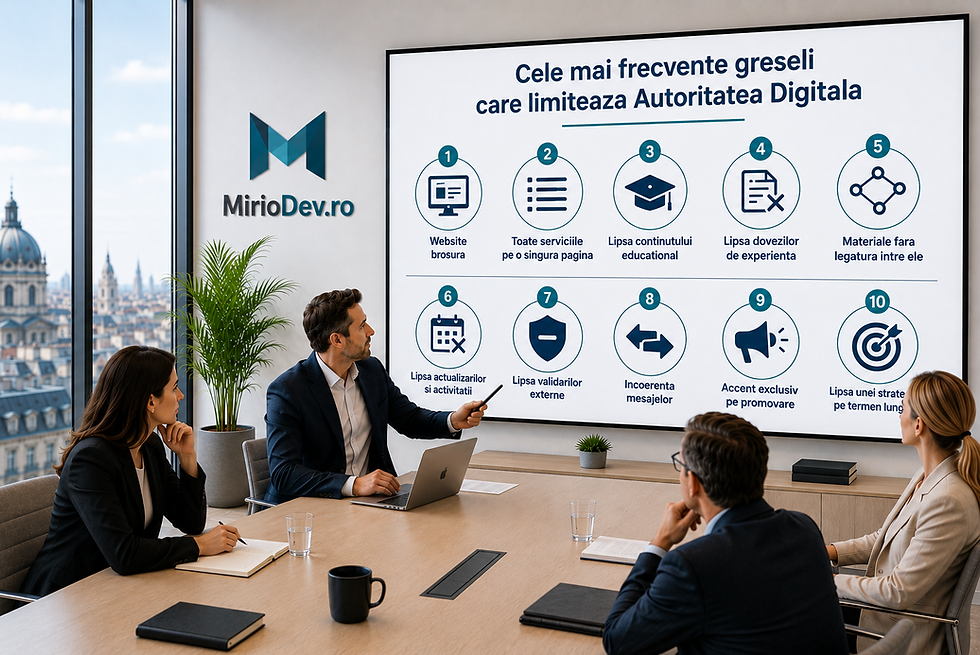
Chapter 8. The Most Common Mistakes That Limit Digital Authority
Many companies invest in developing their websites, publish content regularly, or run promotional campaigns, yet the results they achieve fall short of expectations.
In most cases, the problem is not a lack of activity.
The problem is the absence of a coherent strategy.
Digital Authority is influenced not only by what a company publishes, but also by how all of its resources are organized, updated, and interconnected.
There are a number of common mistakes that occur regardless of the industry or the size of the organization.
Identifying and correcting these mistakes is one of the fastest ways a company can improve its digital presence.
Mistake No. 1 – The Website Is Treated as a Company Brochure
Many websites contain only a few general pages about the company, its services, and contact information.
This type of structure may be sufficient to introduce the organization, but it is not enough to demonstrate its accumulated experience.
• Clients look for explanations.
• They look for examples.
• They look for answers.
• They look for evidence.
A website that does not provide this information misses the opportunity to build trust.
Mistake No. 2 – All Services or Products Are Presented on a Single Page
Another common situation is presenting all services or products on a single page.
This approach makes it difficult to understand the company's actual areas of expertise.
Each important service or product should be explained on a separate page.
This allows prospective clients to quickly find the information they are looking for, while also helping AI systems better understand the organization's activities.
Mistake No. 3 – Lack of Educational Content
Many websites contain only commercial information.
• The company explains what it does.
• It does not explain why.
• It does not answer clients' questions.
• It does not clarify the differences between solutions.
• It does not present the criteria for choosing a supplier.
Without this information, the process of building trust becomes much more difficult.
Mistake No. 4 – Lack of Evidence Demonstrating Experience
General statements are no longer sufficient.
Expressions such as:
• we have experience;
• we provide comprehensive services;
• we are professionals;
• we have a qualified team;
have limited value if they are not supported by concrete examples.
Projects, case studies, testimonials, and certifications provide far more convincing evidence.
Mistake No. 5 – Publishing Content Without Connecting It
Some companies publish articles only when a new idea comes to mind.
The result is a collection of independent resources with no clear structure.
Every article should be part of a broader strategy.
• Guides should be complemented by supporting articles.
• Supporting articles should refer to projects.
• Projects should be supported by case studies.
This is how a digital information ecosystem is built.
Mistake No. 6 – Lack of Updates and Ongoing Digital Activity
An outdated website or a company that is no longer active online creates the impression of an inactive organization.
In the age of artificial intelligence, AI systems and modern search engines analyze what specialists refer to as freshness—an indicator that reflects how active, up to date, and relevant a company's digital presence is.
This indicator is not limited to the website alone. It is built from the complete set of signals that a company generates across its digital information ecosystem.
These include:
• periodically updating the website and its service or product pages;
• publishing new projects, case studies, guides, and relevant articles;
• maintaining a consistent presence in industry publications and specialized portals within the company's field of activity;
• publishing press releases, interviews, or other materials that reflect the company's ongoing development;
• obtaining new references, recommendations, and citations from credible sources;
• keeping the company's profiles and information up to date across the main digital platforms.
For example, for a company operating in the construction industry, maintaining a consistent presence on specialized platforms such as SpatiulConstruit.ro, ArhiSpec.ro, or Proidea.ro is an important signal that the organization is active and engaged in its field.
Likewise, companies operating in the medical, legal, IT, industrial, or financial sectors should maintain visibility through the publications and channels that are relevant to their respective industries.
AI systems evaluate not only what a company says about itself on its own website, but also how active it is within the digital ecosystem of the industry in which it operates.
The greater the number of recent and credible signals coming from relevant sources, the higher the likelihood that the organization will be perceived as a current and trustworthy source.
Outdated information, the absence of recent projects, a lack of appearances in industry publications, or limited activity within the professional ecosystem can reduce a company's credibility and visibility. In the AI era, continuously updating a company's digital presence is just as important as developing the services or products it provides.
Mistake No. 7 – Lack of External Validation
Some companies communicate exclusively through their own websites.
Although the company website is the official source of information, trust is also strengthened through independent sources.
Industry publications, business press, interviews, participation in events, and client testimonials complement the company's image and contribute to the development of its digital reputation.
Mistake No. 8 – Inconsistent Messaging
Different descriptions of the same service or product, contradictory information, or the lack of a consistent direction negatively affect how users perceive a company.
All published resources should communicate the same image of the company and consistently reflect the same areas of expertise.
Consistency is one of the essential foundations of Digital Authority.
Mistake No. 9 – Focusing Exclusively on Promotion
Promotion can generate traffic. It cannot build trust on its own.
If users arrive on a website and do not find enough relevant information, the investment in promotion will deliver only limited results.
Promotion should be supported by valuable content and a well-developed digital information ecosystem.
Mistake No. 10 – Lack of a Long-Term Strategy
Perhaps the most costly mistake is taking a reactive approach.
• An article is published only when there is time available.
• The website is updated only when a new service is introduced.
• A project is documented only when there is a request to do so.
Digital Authority cannot be built this way.
It requires a clear strategy, well-defined objectives, and the continuous development of the company's digital assets.
The Most Common Mistakes and Their Impact
Mistake
-
Presentation website with no valuable content
-
Superficial presentation of services
-
Lack of guides and supporting articles
-
Lack of projects and case studies
-
Lack of testimonials
-
Lack of external validation
-
Outdated content
-
Lack of resource interconnection
-
Exclusive focus on promotion
-
Lack of a strategy
Impact on the Company
-
Low level of trust
-
Areas of expertise are not sufficiently understood
-
Fewer opportunities to educate prospective clients
-
Experience is difficult to demonstrate
-
Lower credibility
-
Limited digital reputation
-
Perception of an inactive company
-
Poor user experience
-
Limited long-term results
-
Fragmented and inefficient development
How Can These Mistakes Be Corrected?
Most of these mistakes do not require extraordinary investments.
They require organization and consistency.
An effective strategy includes:
• gradually developing valuable content;
• documenting important projects;
• regularly publishing guides and supporting articles;
• continuously updating the website;
• strengthening professional validation;
• interconnecting all existing resources.
Results appear progressively as the company accumulates relevant content and continues to develop its digital information ecosystem.
Key Takeaway
-
Most problems are not caused by a lack of promotion, but by the absence of a coherent strategy.
-
Digital Authority is limited when a website contains only commercial information.
-
Evidence is more convincing than claims.
-
Consistency and continuity are more important than publishing content only occasionally.
-
Correcting these mistakes contributes simultaneously to building trust, strengthening digital reputation, and improving AI Visibility.
Recommended Resources
If you want to avoid the most common mistakes that limit Digital Authority, we recommend:
Why Your Website Is Not Being Cited by AI
https://www.miriodev.ro/en/post/why-your-website-is-not-being-cited-by-ai
Why Some Companies Appear in AI Responses While Others Do Not
https://www.miriodev.ro/en/post/why-some-companies-appear-in-ai-responses-while-others-do-not
How AI Influences a Company's Reputation
https://www.miriodev.ro/en/how-ai-influences-a-companys-reputation
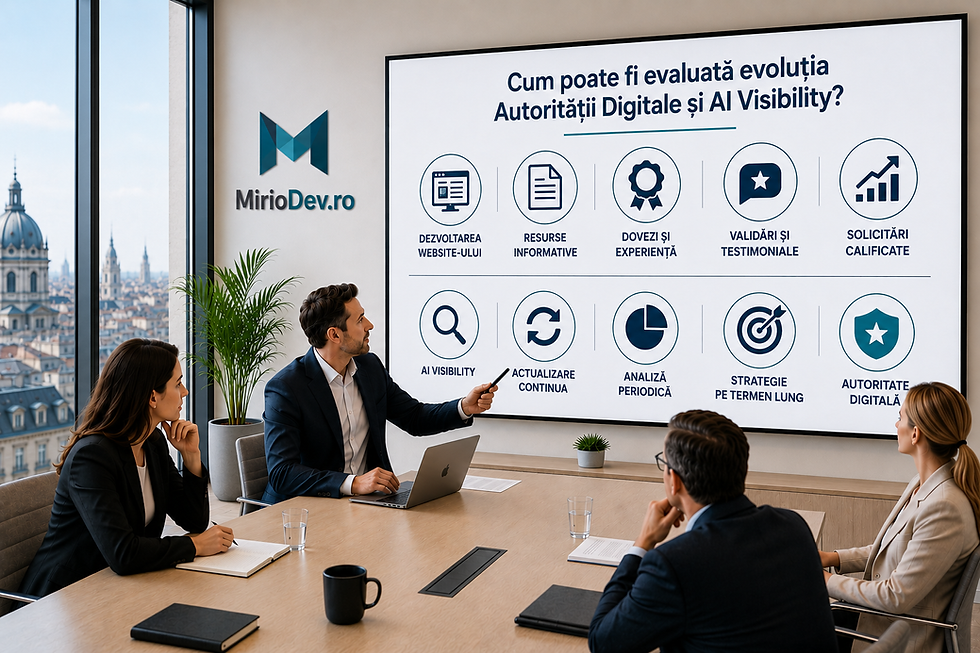
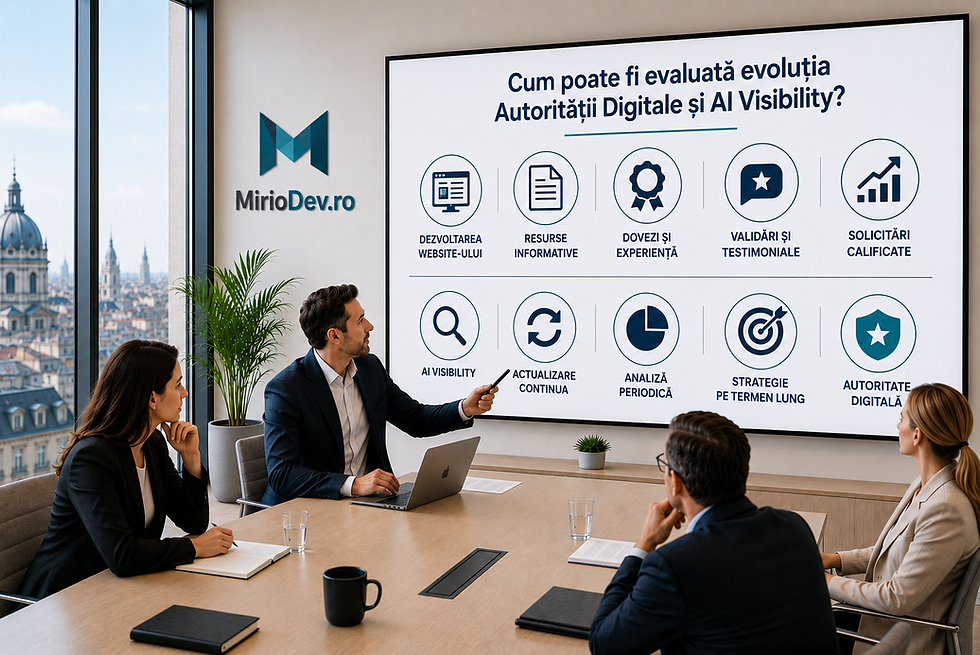
Chapter 9. How Can the Growth of Digital Authority and AI Visibility Be Evaluated?
One of the most common questions managers ask after investing in website development, content creation, or strengthening their digital reputation is:
How do we know whether the strategy is working?
The answer cannot be provided by a single metric.
Digital Authority is neither a score displayed in a platform nor an index that can be measured through a single application.
It is the result of the combined evolution of multiple elements which, when analyzed together, indicate whether a company is becoming better understood, more credible, and more visible in the digital environment.
For this reason, evaluation should be carried out periodically and should take into account both quantitative and qualitative indicators.
There Is No Single Digital Authority Metric
Unlike other marketing activities, where results can be measured through metrics such as impressions or conversions, Digital Authority requires a broader approach.
For example, an increase in the number of website visitors does not guarantee an increase in trust.
Likewise, publishing a large number of articles does not guarantee growth in perceived expertise.
What truly matters is how all resources contribute to the company's overall image.
What Can Be Evaluated?
A well-developed strategy can be monitored through the evolution of indicators such as:
• the development of the website;
• the growth in the number of informational resources;
• the diversification of content types;
• the documentation of important projects;
• the increase in the number of case studies;
• the development of the Frequently Asked Questions section;
• the increase in the number of testimonials;
• obtaining new certifications;
• appearances in relevant publications;
• an increase in qualified inquiries;
• an increase in the number of client referrals.
These indicators reflect the company's progress from the perspective of Digital Authority.
Recommended Indicators
Indicator
-
Number of Service or Product Pages
-
Number of Published Guides
-
Number of Supporting Articles
-
Number of Documented Projects
-
Number of Case Studies
-
Number of Testimonials
-
Editorial Appearances
-
Content Updates
-
Growth in Qualified Inquiries
What It Can Reveal
-
Development of areas of expertise
-
Ability to educate the market
-
Coverage of important topics
-
Publicly demonstrated experience
-
Ability to explain complex projects
-
Level of trust confirmed by clients
-
External professional validation
-
Continuity in developing the digital information ecosystem
-
Impact on the sales process
These indicators should not be analyzed individually. They should be interpreted together.
Periodic evaluation is recommended because the digital ecosystem is constantly evolving, and new information contributes to strengthening the company's online reputation.
How Can an AI Visibility Strategy Be Evaluated?
AI Visibility is more difficult to measure because AI-powered systems are constantly evolving.
However, there are several ways to evaluate a company's progress.
For example:
• whether the organization is mentioned in relevant AI responses;
• whether its areas of expertise are described accurately;
• whether its key services are presented correctly;
• whether representative projects or examples are referenced;
• whether responses are consistent across different AI systems;
• whether there are any misunderstandings regarding the company's activities.
These evaluations should be carried out periodically because the way AI systems use and interpret information changes over time.
Progress Should Be Evaluated Over the Long Term
Digital Authority does not develop in a linear way.
There are periods during which many new resources are published, and periods dedicated to strengthening and expanding existing content.
For this reason, results should be evaluated quarterly or semi-annually, rather than from one week to the next.
Organizations that monitor long-term progress are better able to identify trends and adapt their strategy whenever necessary.
Practical Example
Let's assume that, over the course of one year, a company publishes:
• two comprehensive guides;
• eight supporting articles;
• six case studies;
• twelve documented projects;
• fifteen testimonials;
• five editorial materials in relevant publications.
At the same time, it updates its service and product pages and expands its Frequently Asked Questions section.
At the end of the period, the organization may observe:
• increased time spent on the website;
• an increase in inquiries from better-informed prospective clients;
• an increase in client referrals;
• improved representation of the company in AI-generated responses;
• a stronger professional reputation.
None of these results is produced by a single action.
They are achieved through the continuous accumulation of the digital assets developed by the company.
Evaluation Should Focus on the Maturity of the Digital Information Ecosystem
A strategy based on Digital Authority does not focus solely on increasing website traffic.
Its objective is to develop a digital information asset that becomes increasingly valuable over time.
As new resources are added, such as:
• guides;
• supporting articles;
• projects;
• case studies;
• certifications;
• testimonials;
• publications and external validation;
the company becomes easier to understand for both prospective clients and search engines, as well as AI-powered systems.
This is one of the most important signs of a maturing digital information ecosystem.
Simplified Evaluation Model
Area Evaluated
-
Website
-
Services / Products
-
Guides
-
Supporting Articles
-
Projects
-
Case Studies
-
Testimonials
-
Publications
-
AI Visibility
Evaluation Question
-
Does it explain the company's activities clearly enough?
-
Does each important service or product have its own dedicated page?
-
Are there resources that educate the market?
-
Are clients' frequently asked questions adequately addressed?
-
Is the company's experience demonstrated through relevant examples?
-
Are real-world situations and their solutions presented?
-
Are there authentic client testimonials?
-
Does the company benefit from external professional validation?
-
Is the organization accurately described by AI systems?
This model can serve as a starting point for periodically evaluating a company's progress.
Key Takeaway
-
Digital Authority cannot be evaluated through a single metric.
-
Progress should be assessed based on the complete set of digital assets developed by the company.
-
AI Visibility is the result of building a consistent and credible digital presence.
-
Evaluation should be carried out periodically and compared over time.
-
The strategy should evolve as the company continues to develop its digital information ecosystem.
Continue Reading
For practical examples regarding the evaluation of the evolution of Digital Authority and AI Visibility, you may also explore:
Testimonials
https://www.miriodev.ro/en/testimonials
Clients
https://www.miriodev.ro/en/clients
Case Studies
https://www.miriodev.ro/en/case-studies
How AI Influences a Company's Reputation
https://www.miriodev.ro/en/how-ai-influences-a-companys-reputation

Chapter 10. How Do You Build a Digital Authority Growth Strategy?
Building Digital Authority does not mean publishing as many pages as possible, nor does it mean carrying out isolated promotional activities.
Results are achieved when a company follows a clear strategy that is adapted to its industry, business objectives, and available resources.
There is no universal formula.
A construction company, an industrial manufacturer, a B2B service provider, or a consulting firm will each have different needs.
However, there are a number of principles that can serve as the foundation for developing an effective strategy, regardless of the industry.
The Strategy Should Start with the Current Situation
Before publishing new resources, it is important to evaluate the existing digital presence.
This analysis makes it possible to identify the company's strengths, the resources already available, and the areas that require further development.
Among the questions worth evaluating are:
• Does the website explain the company's activities clearly enough?
• Are there dedicated pages for each important service or product?
• Are relevant projects presented?
• Are there guides or articles that answer clients' questions?
• Are case studies available?
• Are testimonials available?
• Does the company benefit from external professional validation?
• Is the information up to date?
The answers to these questions make it possible to establish priorities.
The Objectives Should Be Business-Oriented, Not Just Marketing-Oriented
One of the most common mistakes is defining objectives that are exclusively digital.
For example:
• increasing website traffic;
• increasing the number of pages;
• increasing the number of articles;
• increasing the number of inquiries or qualified leads.
These indicators can be useful, but they do not represent the ultimate objective.
An effective strategy focuses on objectives such as:
• increasing trust;
• strengthening professional reputation;
• clearly explaining areas of expertise;
• reducing the time required for the sales process;
• attracting better-informed inquiries;
• differentiating the company from its competitors.
All digital activities should contribute to achieving these objectives.
The Priority Should Be the Development of Digital Assets
Promotional campaigns generate results only while they are running.
Digital assets continue to generate value for years.
For this reason, it is recommended that a significant portion of the investment be directed toward developing permanent resources.
These may include:
• detailed service or product pages;
• guides;
• supporting articles;
• documented projects;
• case studies;
• certification pages;
• testimonials;
• technical resources;
• presence in high-quality editorial publications.
Each of these represents a digital asset that contributes to the growth of Digital Authority.
Development Should Be Planned
Publishing content only when there is time available generally leads to modest results.
An effective strategy requires planning the development of the digital information ecosystem.
A simplified example may look like this:
Stage
Stage 1
Stage 2
Stage 3
Stage 4
Stage 5
Stage 6
Main Objective
-
Strengthening the website and service and/or product pages
-
Publishing the main guides
-
Developing supporting articles
-
Documenting projects and creating case studies
-
Strengthening testimonials and external professional validation
-
Continuous updating and expansion of the digital information ecosystem
The order may vary depending on the specific characteristics of each company.
What is important is that the development is planned and consistent.
Content Should Answer Clients' Questions
One of the most effective methods for developing Digital Authority is transforming questions received from clients into informational resources.
Each recurring question can become:
• a supporting article;
• a frequently asked question;
• a chapter in a guide;
• a case study;
• the publication or presentation of a material in an industry magazine or specialized portal.
In this way, the experience accumulated through daily activities is leveraged and contributes to the development of the company's digital information asset.
Each Project Can Generate Valuable Content
Many organizations complete dozens or even hundreds of projects every year.
Only a small part of these projects are presented publicly.
In reality, each project can contribute to the development of Digital Authority.
For example, a project can generate:
• a portfolio presentation;
• a case study;
• a technical article;
• relevant images;
• a testimonial;
• content for an industry publication.
In this way, practical experience is transformed into content that continues to generate long-term value.
The Strategy Should Be Continuously Updated
Companies evolve.
Services and products change.
New technologies emerge.
Client behavior changes.
For this reason, the Digital Authority development strategy should not be considered a static document.
It should be periodically analyzed and adapted according to:
• the company's evolution;
• the introduction of new services;
• market development;
• technological changes;
• changes in user behavior.
This flexibility allows long-term relevance to be maintained.
Simplified Strategy Model
Objective
-
Increasing trust
-
Demonstrating expertise
-
Strengthening reputation
-
Increasing AI Visibility
-
Differentiating from competitors
Recommended Actions
-
Guides, case studies, testimonials
-
Service pages, product pages, supporting articles, projects
-
Industry publications, business press, professional validation
-
Development of the digital information ecosystem
-
Original content based on the company's experience
An Effective Strategy Produces Cumulative Results
One of the most important advantages of a strategy based on Digital Authority is the cumulative effect.
• Each new resource complements what already exists.
• Each guide links to other materials.
• Each supporting article explains a specific aspect.
• Each project demonstrates experience.
• Each case study provides deeper insight into a real example.
• Each editorial appearance strengthens the company's reputation.
In this way, the value of the digital information ecosystem increases year after year.
This is one of the reasons why organizations that consistently invest in developing digital assets obtain long-term benefits, even after a promotional campaign has ended.
Key Takeaway
-
Digital Authority is not built through isolated actions, but through a coherent strategy.
-
Objectives should focus on the development of the company, not only on marketing indicators.
-
Digital assets represent investments that continue to generate long-term value.
-
The company's practical experience should be leveraged through relevant and well-documented content.
-
An effective strategy is periodically evaluated and adapted as the company evolves.
If you want to apply the principles presented in this guide, we recommend:
How to Be Cited by AI
https://www.miriodev.ro/en/how-to-be-cited-by-ai
How AI Influences a Company's Reputation
https://www.miriodev.ro/en/how-ai-influences-a-companys-reputation
Services
https://www.miriodev.ro/en/services
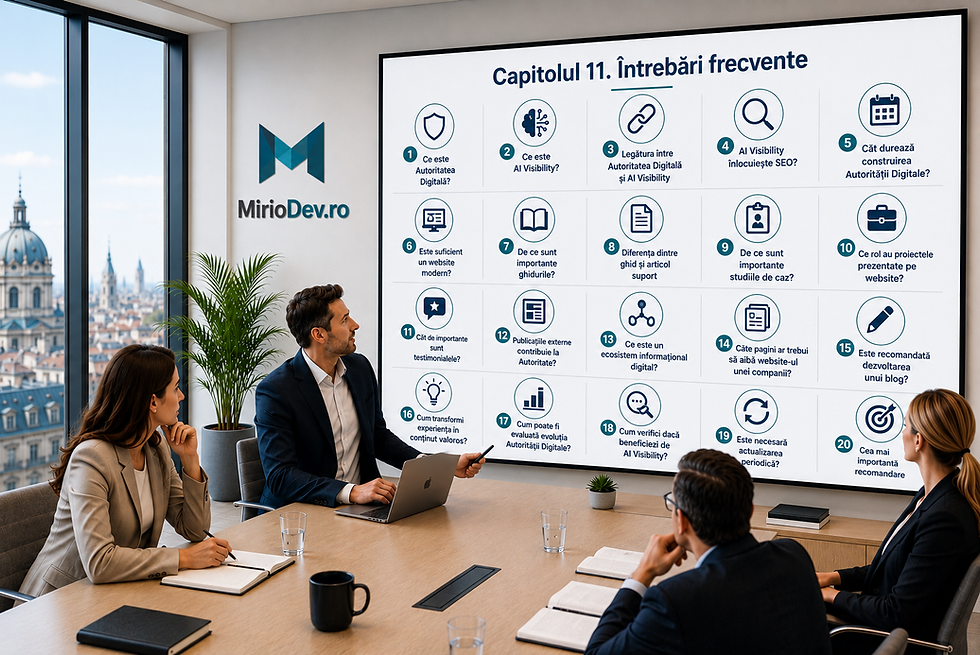
Chapter 11. Frequently Asked Questions
1. What Is Digital Authority?
Digital Authority represents the level of credibility, relevance, and trust that a company builds through its entire online presence.
It is not determined by a single website or a single promotional campaign, but by the complete set of public information that explains the company's activities, demonstrates its accumulated experience, and confirms its expertise.
2. What Is AI Visibility?
AI Visibility represents a company's ability to be identified, understood, mentioned, or recommended by AI-powered systems when users search for information about a specific field, service, or product.
3. Is There a Connection Between Digital Authority and AI Visibility?
Yes.
Digital Authority represents the foundation on which AI Visibility is developed.
The better documented and easier to understand a company is, the higher the chances that it will be mentioned in responses generated by AI-powered systems.
4. Does AI Visibility Replace Search Engine Optimization?
No.
Search engine optimization and AI Visibility have complementary objectives.
The first focuses on increasing visibility in search results, while the second contributes to increasing the company's relevance and credibility for AI-powered systems.
A modern strategy should integrate both approaches.
5. How Long Does It Take to Build Digital Authority?
There is no standard timeframe.
The duration depends on the industry, the current level of digital presence, the competition, and the pace at which the company develops valuable content.
Digital Authority is built progressively and continues to strengthen as the digital information ecosystem evolves.
6. Is a Modern Website Enough?
No.
A website represents the central point of a company's digital presence, but it is not sufficient to build Digital Authority.
It must be supported by detailed service pages, guides, supporting articles, projects, case studies, testimonials, certifications, and professional validation through external sources.
7. Why Are Guides Important?
Guides allow companies to provide in-depth explanations of topics that are important to clients.
They demonstrate the company's level of expertise, answer complex questions, and contribute to the development of Digital Authority through valuable and long-lasting content.
8. What Is the Difference Between a Guide and a Supporting Article?
A guide covers a broad topic and provides a comprehensive perspective on it.
A supporting article explores a specific question or situation in greater detail and complements the information presented in the guide.
The two types of content are complementary.
9. Why Are Case Studies Important?
Case studies transform practical experience into useful information for prospective clients.
They explain existing challenges, implemented solutions, and achieved results, demonstrating the company's approach and way of working.
10. What Role Do Projects Presented on the Website Play?
Projects demonstrate the company's practical experience.
They allow prospective clients to understand the types of work completed, the level of complexity, and the fields in which the organization operates.
11. How Important Are Testimonials?
Testimonials represent one of the most valuable forms of validation because they confirm the company's experience from the clients' perspective.
Authentic recommendations contribute significantly to increasing trust.
12. Do External Publications Contribute to Increasing Digital Authority?
Yes.
Presence in industry portals, business press, or other relevant publications complements the information presented on the website and contributes to the company's professional validation.
13. What Does a Digital Information Ecosystem Mean?
A digital information ecosystem represents the complete set of resources developed by a company to explain its activities, demonstrate its accumulated experience, and answer the questions of prospective clients.
It includes the website, service pages, guides, supporting articles, projects, case studies, testimonials, certifications, and external publications.
14. How Many Pages Should a Company's Website Have?
There is no ideal number.
More important than the number of pages is the fact that they address the real information needs of clients and clearly explain the company's areas of expertise.
15. Is Developing a Blog Recommended?
Yes, if it is used to publish useful articles based on the company's experience.
A blog that contains only promotional materials or content without practical value contributes very little to the development of Digital Authority.
16. How Can a Company's Experience Be Transformed into Valuable Content?
The best sources of content are the organization's ongoing activities.
Frequently asked questions received from clients, completed projects, technical challenges, case studies, and practical examples can be transformed into resources that contribute to the development of the digital information ecosystem.
17. How Can the Evolution of Digital Authority Be Evaluated?
Through the periodic analysis of the digital assets developed by the company, the published content, the professional validations obtained, the inquiries received, and the way the organization is perceived in the online environment.
18. How Can You Check Whether a Company Benefits from AI Visibility?
A practical method is to periodically test relevant questions addressed to different AI-powered systems and compare how they describe the company, its services, and its areas of expertise.
These evaluations should be carried out over time, because responses may evolve as the digital information ecosystem develops.
19. Is Periodic Content Updating Necessary?
Yes.
The website should continuously reflect the company's evolution.
New services and products, important projects, obtained certifications, and subsequently published materials should be integrated into the digital information ecosystem to maintain relevance and credibility.
20. What Is the Most Important Recommendation for a Company That Wants to Develop Its Digital Authority?
To view its digital presence as a strategic company asset.
Investing in valuable content, documented projects, professional validation, and the development of a digital information ecosystem generates cumulative benefits and contributes to increasing trust, reputation, and long-term visibility.
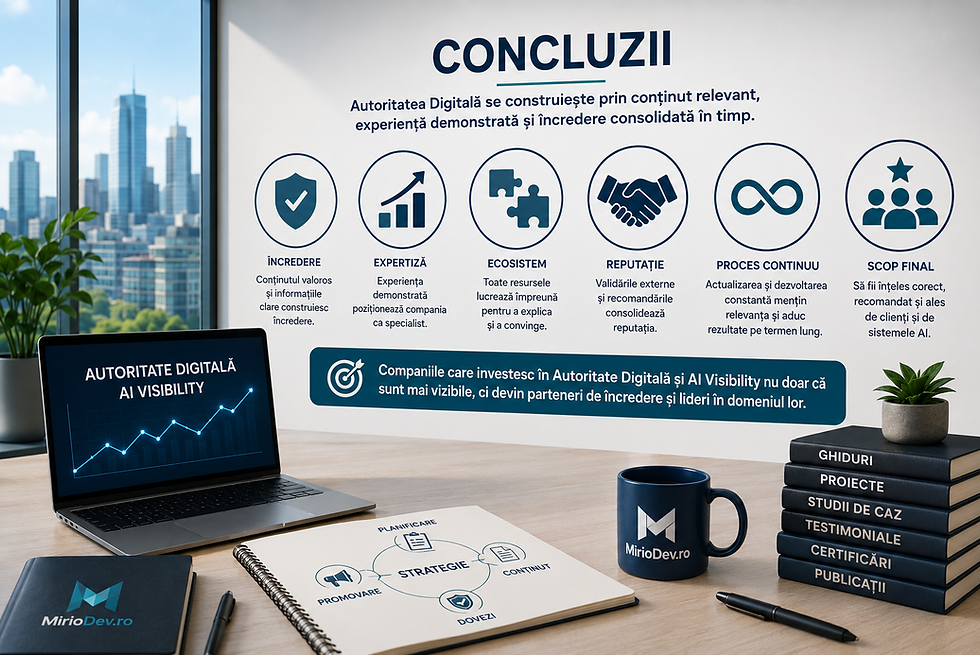
Conclusions
Digital Authority does not represent a temporary trend, nor is it a concept reserved for large companies.
It reflects the way an organization is understood, evaluated, and perceived in the digital environment.
As client behavior continues to evolve, and AI-powered systems become increasingly used in the research and decision-making process, organizations that invest in developing a complete digital presence gain an important competitive advantage.
This advantage is not built through a single action.
It emerges through the continuous development of a digital information ecosystem that explains the company's activities, demonstrates accumulated experience, and strengthens trust.
Together, the website, service pages, guides, supporting articles, projects, case studies, testimonials, certifications, and professional validation represent digital assets that continue to generate long-term value.
Companies that adopt this approach do not invest only in visibility.
They invest in reputation and credibility.
They invest in developing an information asset that will continue to support the organization's growth regardless of how technology evolves in the coming years.
Building Digital Authority is a continuous process.
• Each new resource, each documented project, and each relevant piece of information contributes to strengthening the company's image and developing a sustainable competitive advantage.
Ultimately, the most valuable organizations will not be those that communicate the most.
They will be those that succeed in being understood the best.
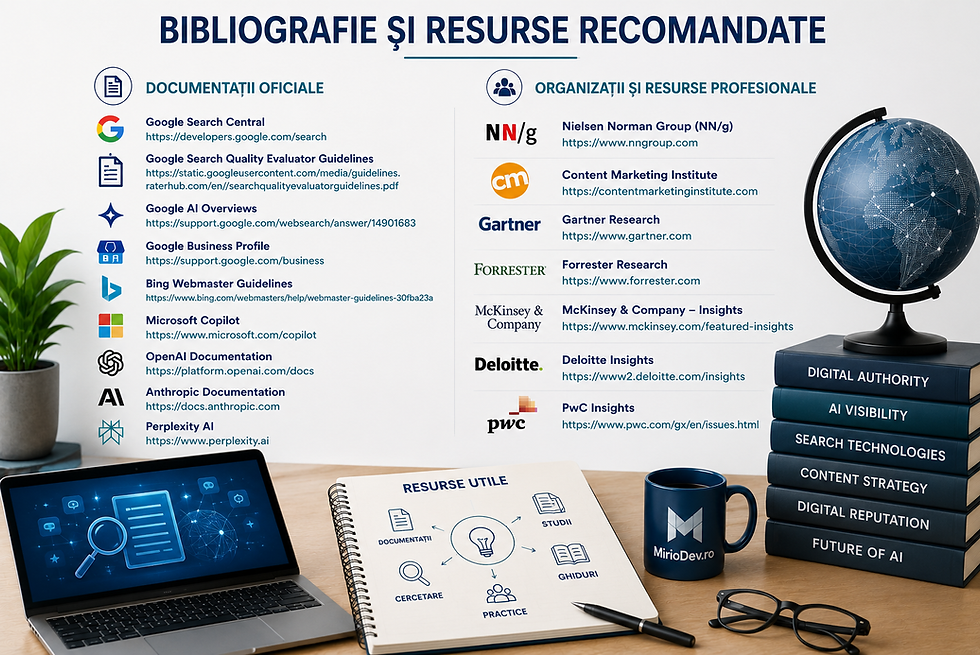
Bibliography and Recommended Resources
The development of Digital Authority and AI Visibility requires an understanding of how user behavior, search technologies, AI-powered systems, and digital communication continue to evolve.
In addition to the practical experience accumulated through the development of digital strategies for companies operating in fields such as construction, industry, professional services, manufacturing, and consulting, we recommend periodically consulting official documentation and studies published by internationally recognized organizations.
Official Documentation
-
Google Search Central - https://developers.google.com/search
-
Google Search Quality Evaluator Guidelines - https://static.googleusercontent.com/media/guidelines.raterhub.com/en
-
Google AI Overviews - https://support.google.com/websearch/answer/14901683
-
Google Business Profile - https://support.google.com/business
-
Bing Webmaster Guidelines - https://www.bing.com/webmasters/help/webmaster-guidelines-30fba23a
-
Microsoft Copilot - https://www.microsoft.com/copilot
-
OpenAI Documentation - https://platform.openai.com/docs
-
Anthropic Documentation - https://docs.anthropic.com
-
Perplexity AI - https://www.perplexity.ai
Professional Organizations and Resources
-
Nielsen Norman Group (NN/g) - https://www.nngroup.com
-
Content Marketing Institute - https://contentmarketinginstitute.com
-
Gartner Research - https://www.gartner.com
-
Forrester Research - https://www.forrester.com
-
McKinsey & Company – Insights - https://www.mckinsey.com/featured-insights
-
Deloitte Insights - https://www2.deloitte.com/insights
-
PwC Insights - https://www.pwc.com/gx/en/issues.html
Recommended Resources on MirioDev.ro
Guides
How to Be Cited by AI - https://www.miriodev.ro/en/how-to-be-cited-by-ai
How AI Influences a Company's Reputation - https://www.miriodev.ro/en/how-ai-influences-a-companys-reputation
Supporting Articles
Why Your Website Is Not Being Cited by AI?
https://www.miriodev.ro/en/post/why-your-website-is-not-being-cited-by-ai
Why Some Companies Appear in AI Responses While Others Do Not?
https://www.miriodev.ro/en/post/why-some-companies-appear-in-ai-responses-while-others-do-not
Why Can AI Describe Your Company Incorrectly?
https://www.miriodev.ro/en/post/why-ai-can-describe-your-company-incorrectly
How Much Does Creating and Developing a Professional Website Cost?
https://www.miriodev.ro/en/post/how-much-does-creating-and-developing-a-professional-website-cost
Case Studies
Case Study: Google AI Overview and Mirio Development
Case Study: SEO, Digital Authority, and AI Trust – Unilux Heritage
Case Study: How Unilux Heritage Became a Source Used by ChatGPT, Gemini, and Perplexity
Case Study: MyHomeIsYours Website Development
Recommended Reading
For a complete understanding of how Digital Authority and AI Visibility are developed, we recommend reviewing Mirio Development resources in the following order:
How to Be Cited by AI
https://www.miriodev.ro/en/how-to-be-cited-by-ai
How AI Influences a Company's Reputation
https://www.miriodev.ro/en/how-ai-influences-a-companys-reputation
Why Your Website Is Not Being Cited by AI
https://www.miriodev.ro/en/post/why-your-website-is-not-being-cited-by-ai
Why Some Companies Appear in AI Responses While Others Do Not
https://www.miriodev.ro/en/post/why-some-companies-appear-in-ai-responses-while-others-do-not
Why Can AI Describe Your Company Incorrectly?
https://www.miriodev.ro/en/post/why-ai-can-describe-your-company-incorrectly
Mirio Development Case Studies
https://www.miriodev.ro/en/case-studies
Testimonials Page
Final Note
Digital Authority and AI Visibility are fields that are continuously evolving.
Effective strategies do not focus on exploiting temporary changes in algorithms, but on developing sustainable digital assets: original content, documented projects, case studies, professional validation, and a coherent digital information ecosystem.
These principles have remained constant regardless the evolution of search engines and continue to represent the foundation of a credible, relevant, and sustainable digital presence.
This is where the concept of Digital Authority comes into play.
Digital Authority is the result of all the information, projects, educational resources, external validation, and credibility signals that a company develops over time to demonstrate who it is, what it does, and why it deserves the trust of its customers.
As this authority continues to grow, so do the chances that the organization will be mentioned, recommended, or cited by AI-powered systems.
This level of presence can be defined through the concept of AI Visibility.
The two should not be viewed as separate objectives.
AI Visibility cannot exist without Digital Authority, while Digital Authority increasingly demonstrates its value through the way a company is represented in AI-generated responses.
Building this type of presence is not the result of a single action or a short-term campaign.
It requires the development of a digital information ecosystem in which every published resource contributes to a better understanding of the company's activities and strengthens its reputation.
The website, service pages, guides, supporting articles, projects, case studies, testimonials, certifications, editorial publications, and every other publicly available resource should communicate the same message and reinforce the same expertise.
This guide presents the key elements that contribute to the growth of Digital Authority and AI Visibility, explains why they matter, and provides a practical perspective on how companies can build a digital presence that is relevant, consistent, and credible.
Whether you are a company at the beginning of your journey or an organization with decades of experience, the principles presented in this guide can serve as the foundation of a digital strategy aligned with the way customers discover, evaluate, and choose business partners today.